Limestone,
in Los Angeles.
Calm, calcareous, and quietly architectural. Limestone is the material designers reach for when the surface should behave like plaster or weathered concrete — softer than marble, warmer than porcelain, and forgiving in daylight.
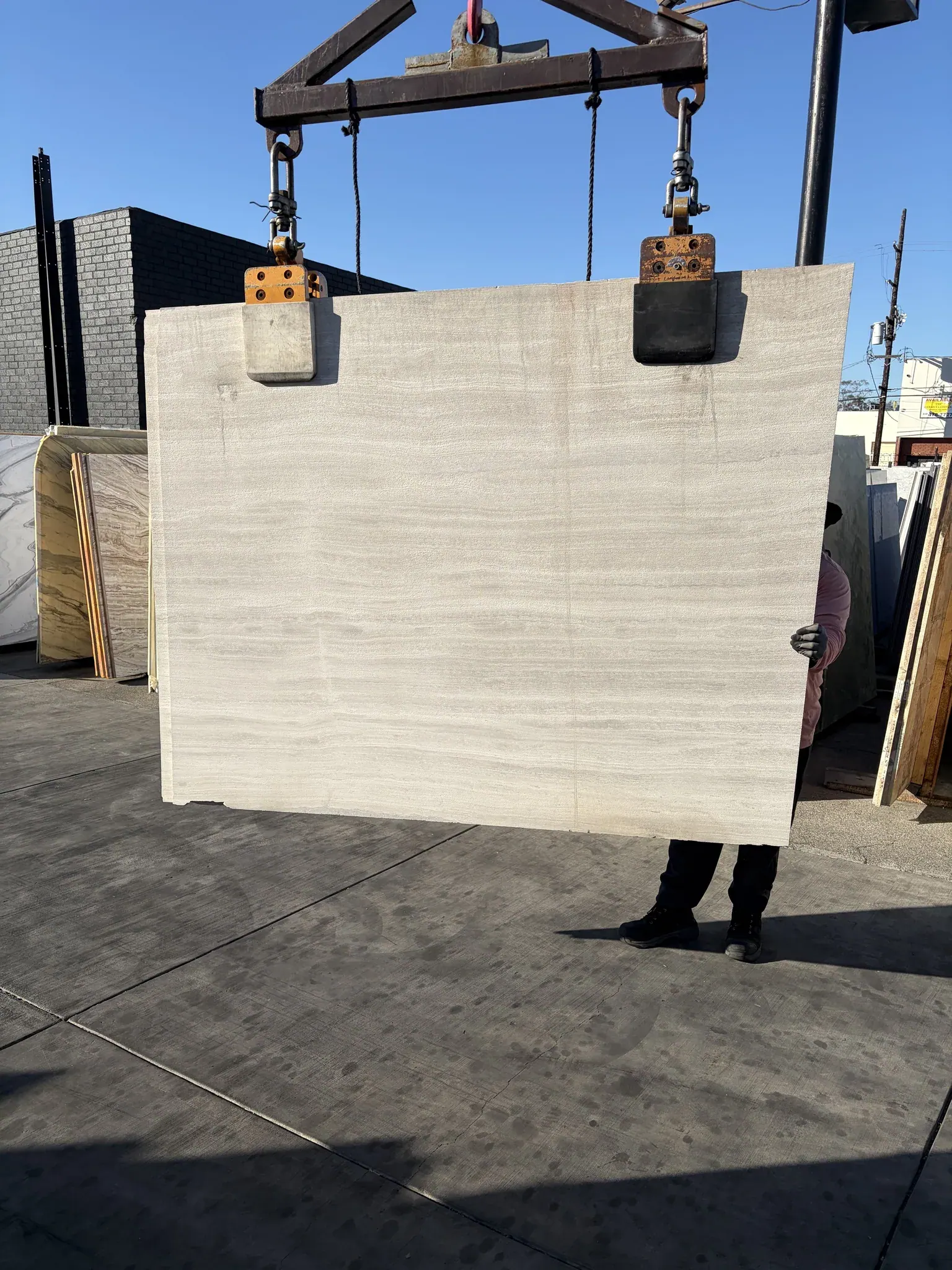
Athens Silver Haisa — Sandblasted
On Limestone
No. 05
Quarried in Greece, Turkey, France, and Italy. Output is steady, blocks run consistent, and the slabs are valued for uniformity rather than figure.
Limestone is a sedimentary stone — calcite laid down on ancient seabeds, compressed over millions of years. It carries fine horizontal bedding rather than the dramatic veining of marble, and a quiet, near-uniform color across the full slab. Athens Silver, Jura, Buff, and the Antolini Taupe family are the workhorses; rarer Italian quarries produce honey and rose variants.
Finish does most of the work. Honed reads soft and architectural; leathered adds texture and hides water marks; sandblasted is the right call for floors, pool surrounds, and exteriors where slip resistance matters. Polished limestone is unusual — the material doesn’t take a true polish the way marble does, and most projects are better served by a matte read.
Limestone is calcareous and reacts to acidic exposure (citrus, wine, harsh cleaners). It is structurally softer than marble and well below quartzite, so detailing matters at edges and high-wear surfaces. The right answer for baths, floors, fireplaces, and exterior cladding — not the right answer for a daily-use kitchen island.
Calm
Visual Character
2–3cm
Standard Gauge
Honed
Default Finish
Limestone · In the Yard
Limestone,
currently on the floor.
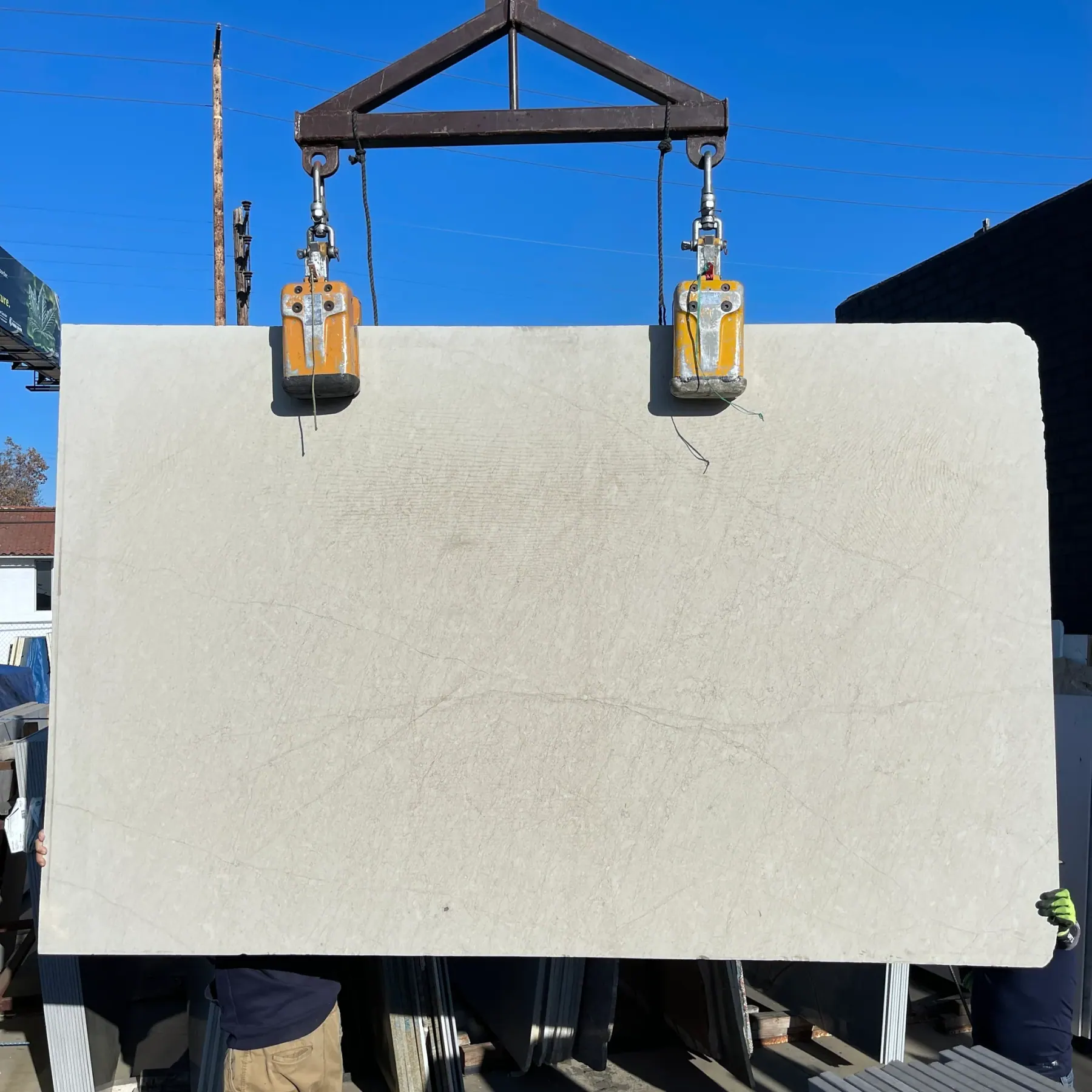
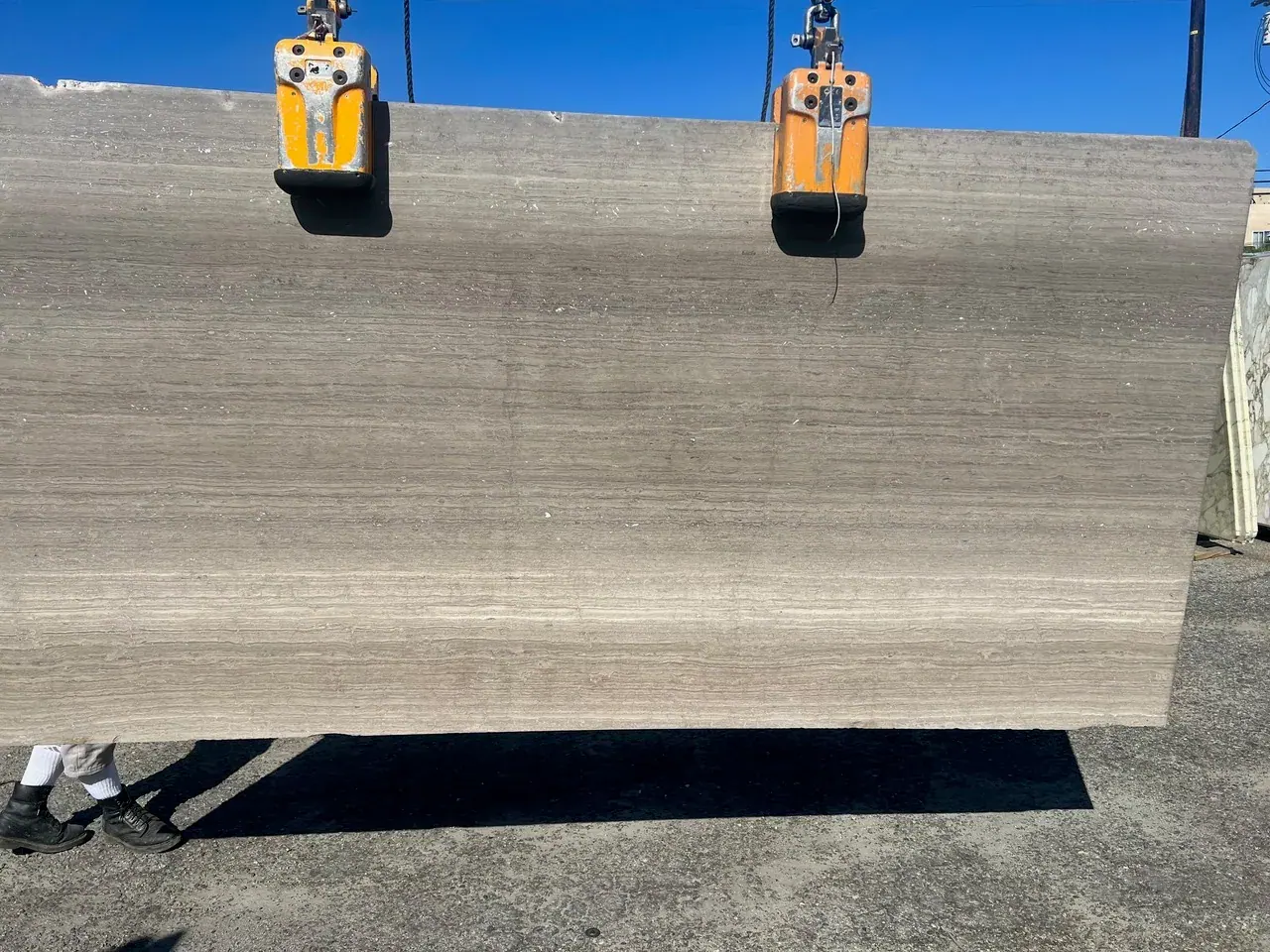
Calm, calcareous slabs in stock now \u2014 honed, leathered, and sandblasted. Tap any slab for the full study.
3 slabs
Common Questions
Limestone
questions, answered.
- What is limestone used for in interiors?
- Limestone is a soft, calm sedimentary stone prized for floors, wall cladding, fireplace surrounds, and bath surfaces. Its quiet, even color and matte character suit minimalist and Mediterranean interiors. Royal Stone stocks Italian and European limestone slabs at our Los Angeles yard.
- Is limestone durable enough for countertops?
- Limestone is softer and more porous than marble or quartzite, so it scratches and etches more readily. It performs beautifully on floors, walls, and low-traffic surfaces; for hardworking kitchen countertops, clients who want a similar look often choose quartzite instead.
- Does limestone need to be sealed?
- Yes. Because it is porous, limestone should be sealed and periodically resealed, especially in wet areas, to resist staining. A honed finish wears most gracefully over time.
- Where can I see limestone slabs in Los Angeles?
- At Royal Stone, 2303 South Sepulveda Blvd, Los Angeles. We hold hand-selected limestone slabs in our yard and showroom — trade and private clients are welcome by appointment. Call (310) 477-3223.
Visit the Yard
Walk a Limestone slab
in natural light.
Slabs are one-of-one. We’d rather pull the piece for you to see than describe it from a photograph. Designers and private clients are welcome by appointment.