Viola,
in Los Angeles.
Italy’s violet marbles — Calacatta Viola, Viola Brecciato, Ceppo Viola Cosmo. A small family of stones with no quiet equivalent: a white field shattered by veins of aubergine, plum and bruise.
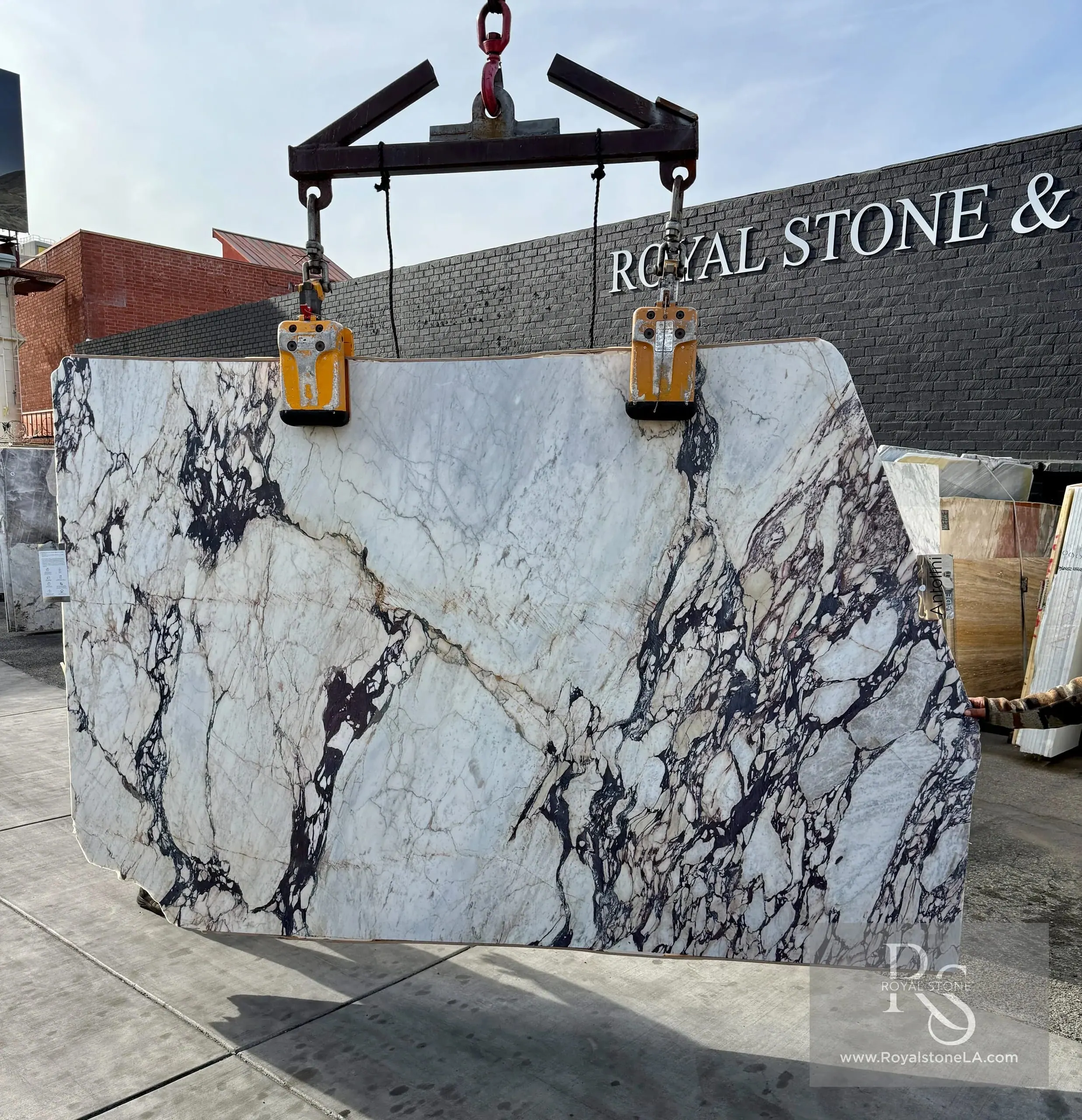
Calacatta Viola — Honed
On Viola
No. 01.2
Quarried in the Apuan Alps and the Verona basin. Output is small, lots are irregular, and the slabs vary materially block to block.
Viola is rare on purpose. The veins of manganese and iron that give the stone its color appear unpredictably in the block, and a single quarry will produce both quiet honey-toned slabs and the saturated, near-magenta pieces designers fly in to see. The supply is small enough that we sometimes hold a slab for a specific kitchen for months.
Within the family: Calacatta Viola pairs a clean white ground with bold violet veining; Viola Brecciato breaks the field into angular fragments held by mineral; Ceppo Viola Cosmo carries pebbled inclusions in a darker matrix. Each behaves differently in light and at scale.
Viola is most often specified for the room’s single sculptural object — a powder bath, a fireplace, a bar back, a primary suite vanity. Honed reads soft; polished pushes the violet toward true purple. We’ll pull the slab for you to walk in daylight.
Rare
Supply
2cm
Standard Gauge
1 of 1
Every Slab
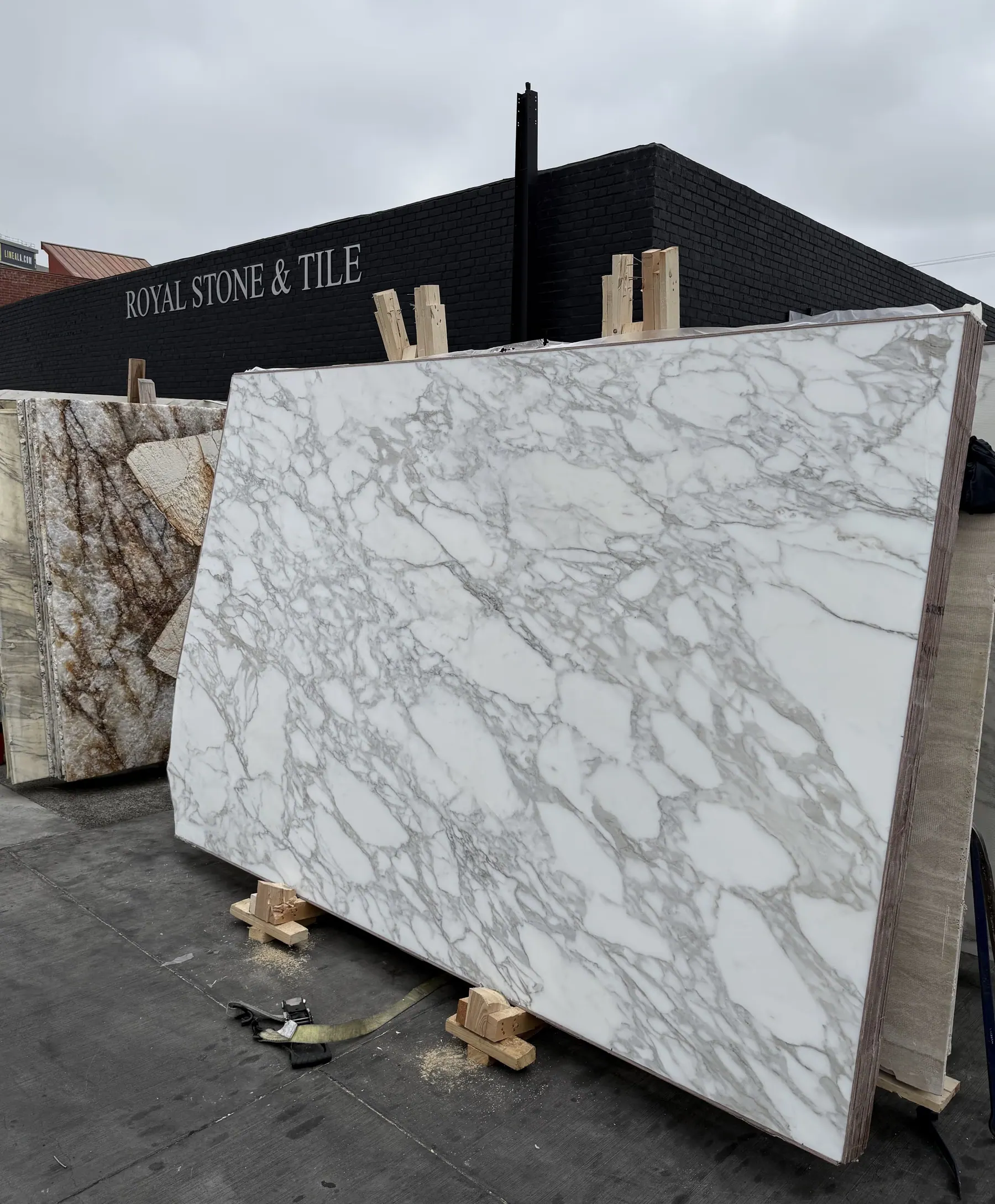
Side by Side
Viola, Borghini or Monet?
A spec-call decision.
A head-to-head with the other Calacatta lots in the yard — origin, field, vein, finish, application and cost, with a decision guide for kitchens, baths and feature walls.
Read the comparisonViola · In the Yard
Viola and Monet,
currently on the floor.
Violet-veined and Monet colored Italian marbles in stock now. Tap any slab for the full study.
16 slabs
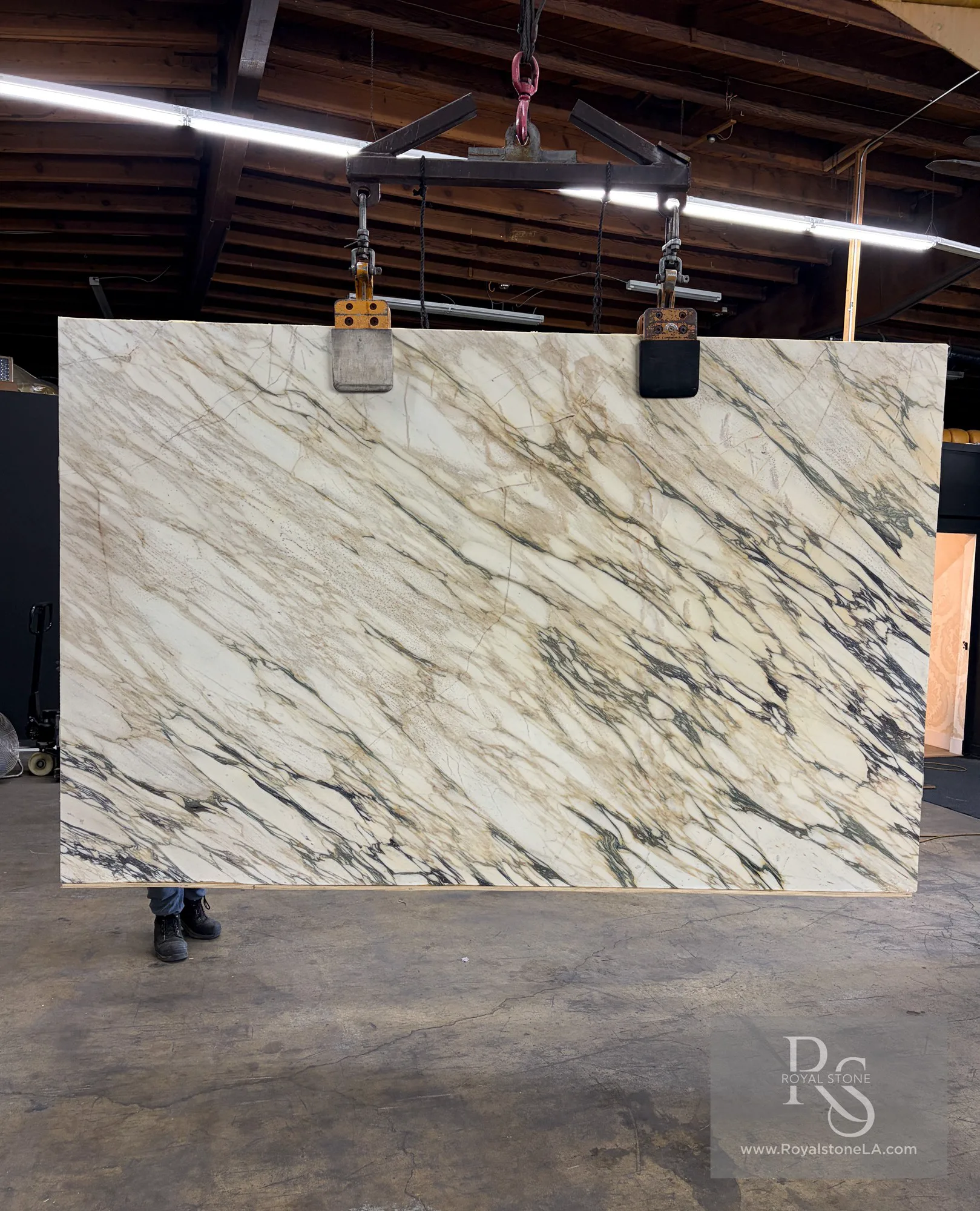
Slab Arrival
Calacatta Viola Monet MAN4410
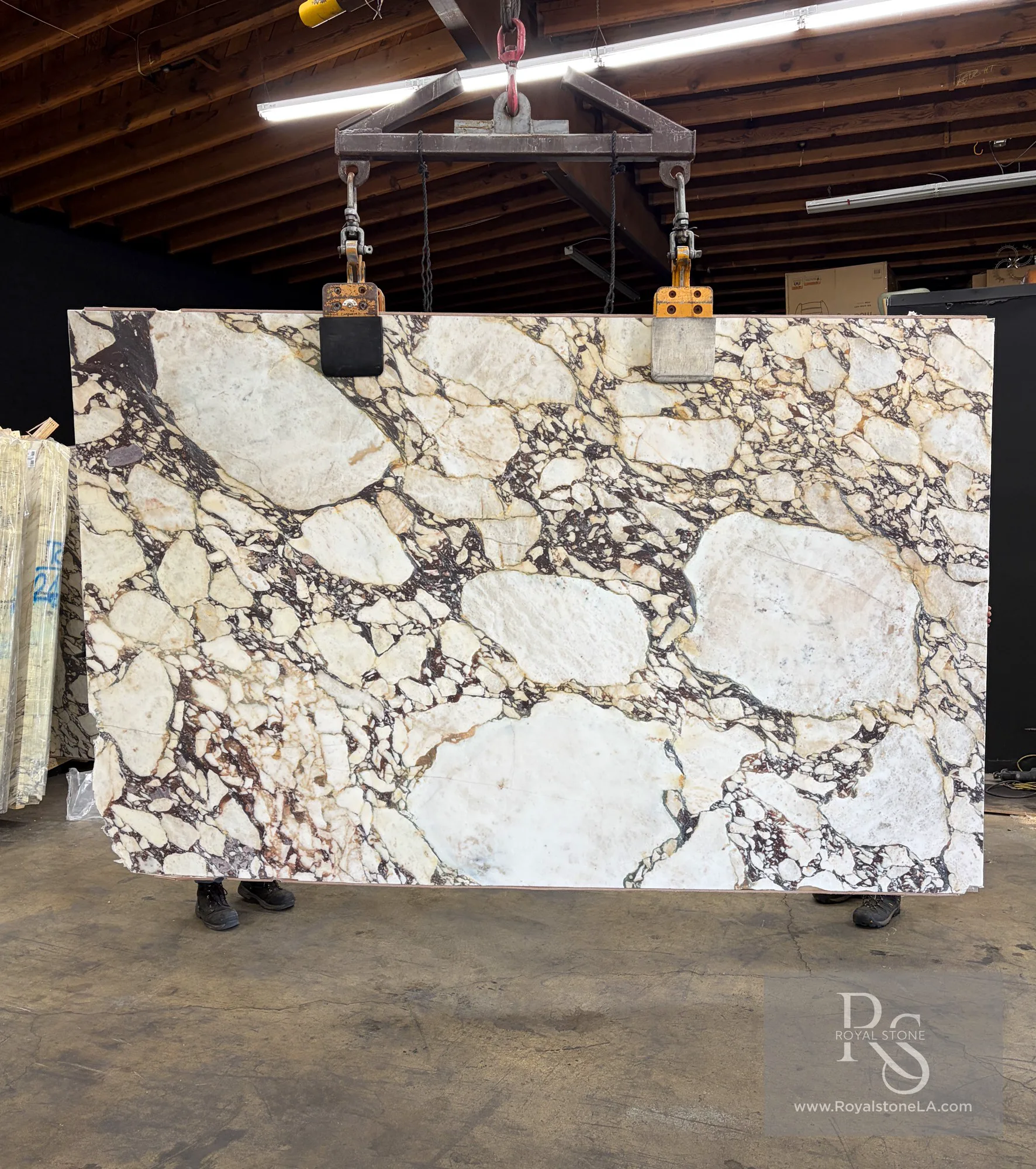
Slab Arrival
Calacatta Viola Extra MAN4860
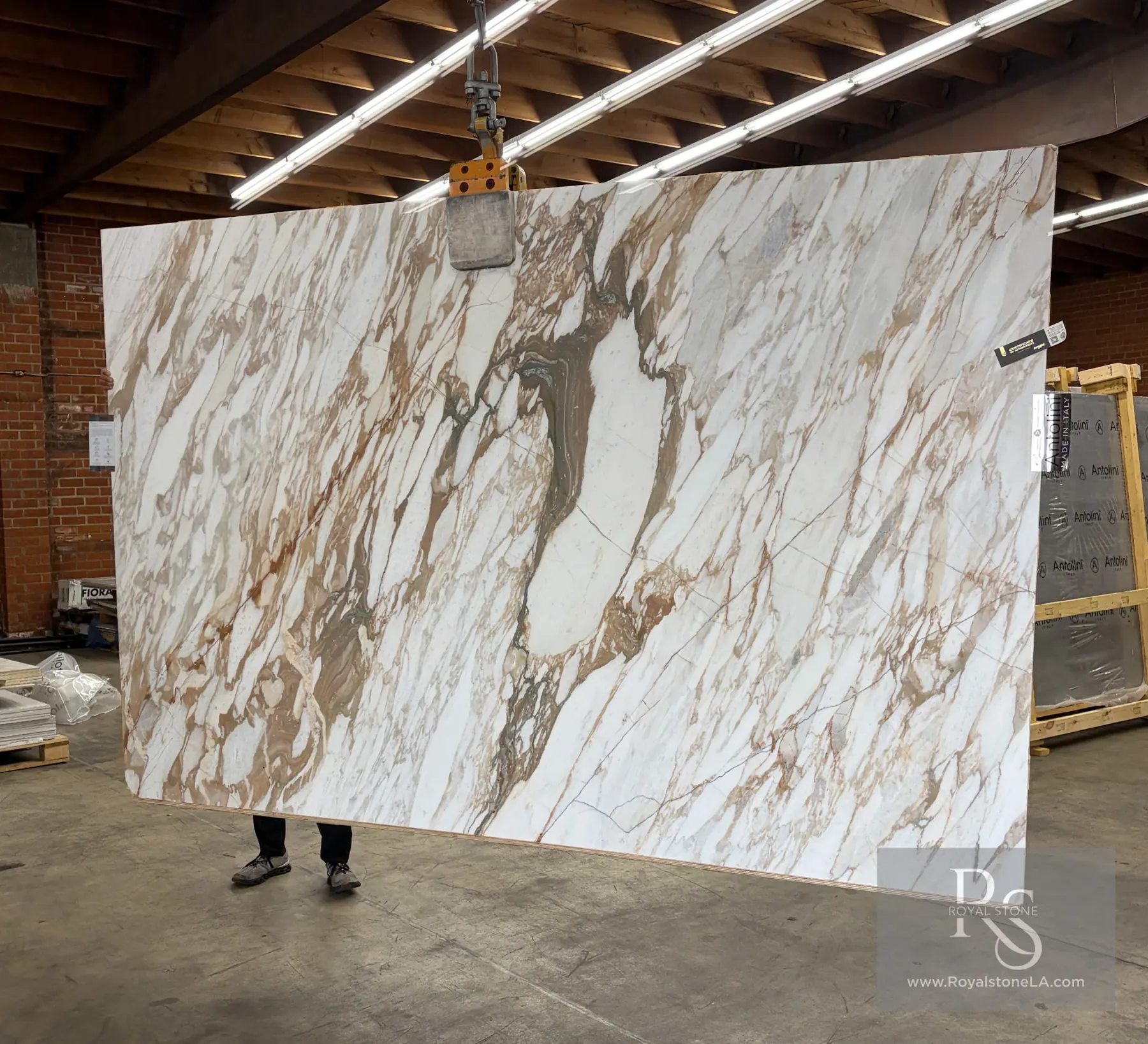
Slab Arrival
2cm Antolini Calacatta Monet Oro Classic Marble EE505 Honed 78" × 121"
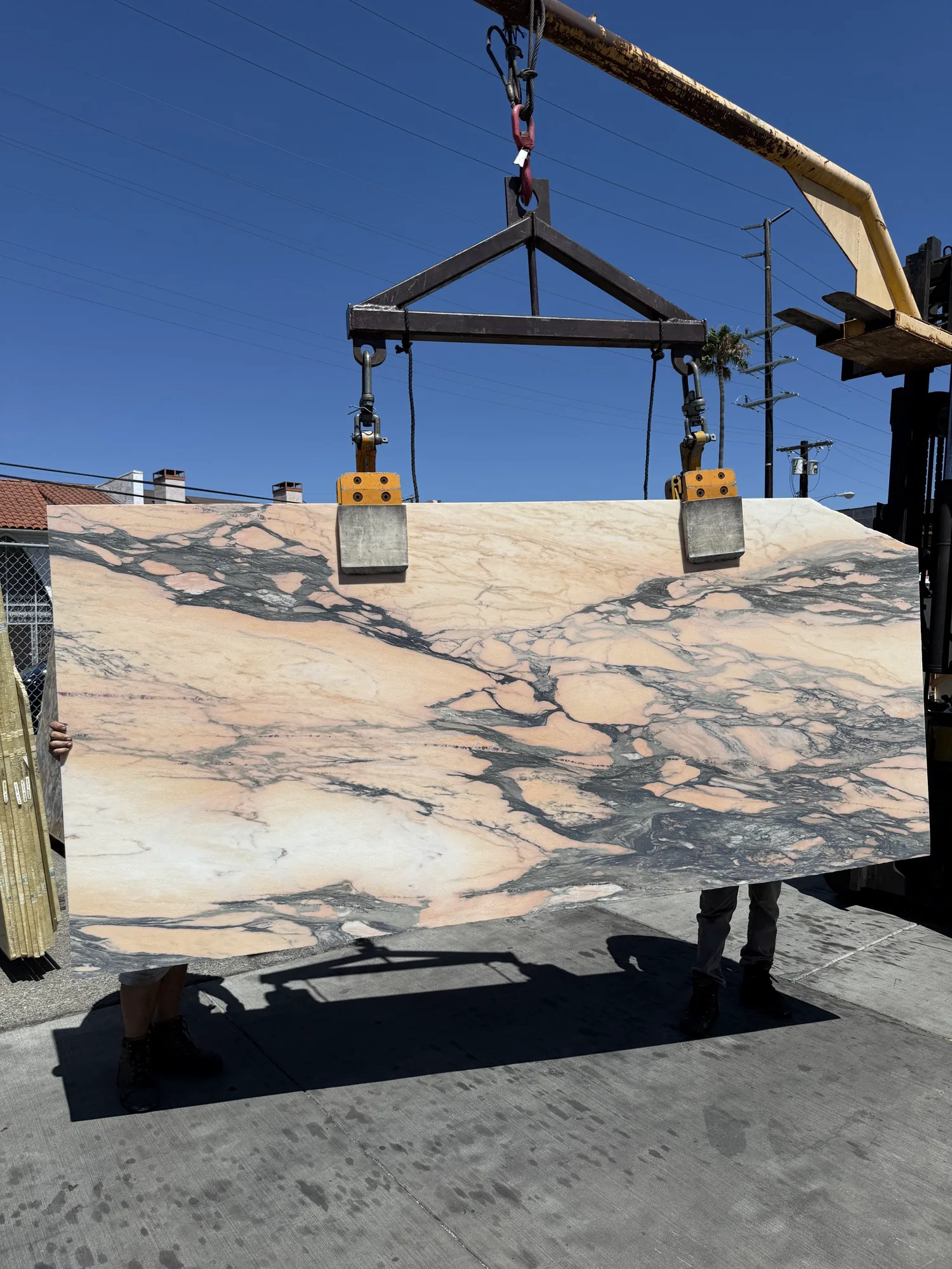
Slab Arrival
2cm Antolini Calacatta Viola Rosenoir DX488 Paonazzo Honed 54″ × 115″
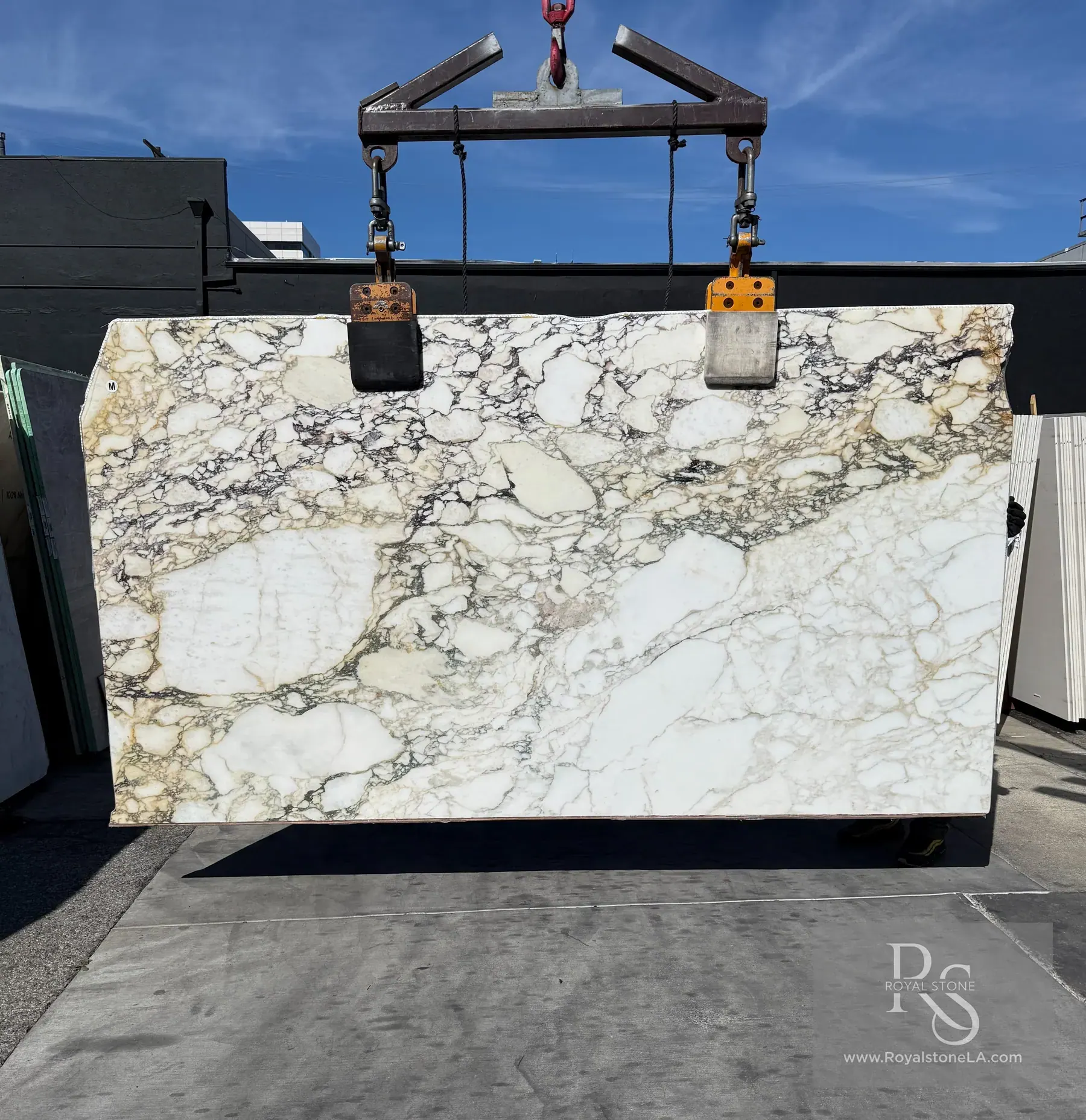
Slab Arrival
2cm Calacatta Oro Gold Monet Honed 64" × 112"
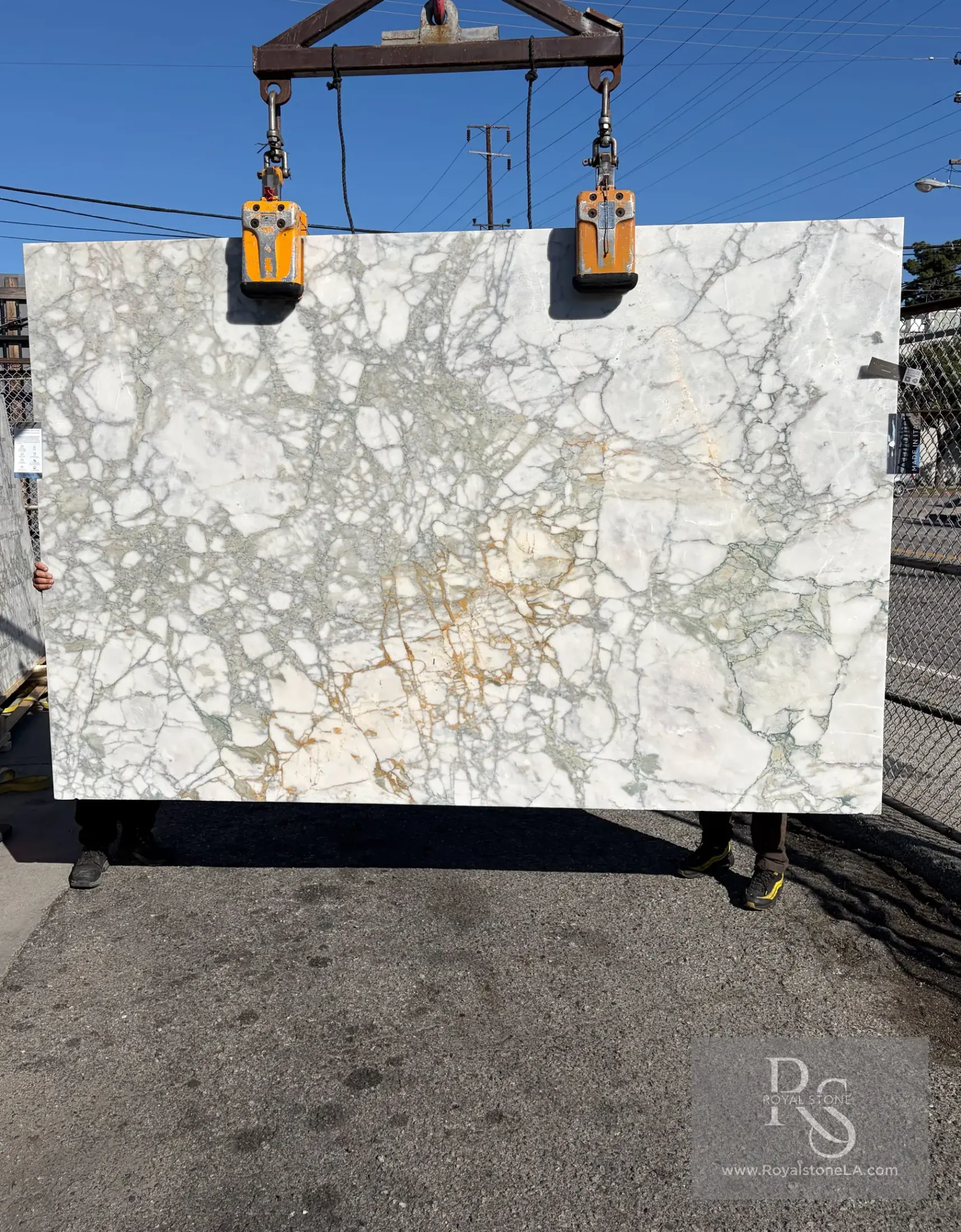
Slab Arrival
Antolini Calacatta Monet Verde Honed Marble
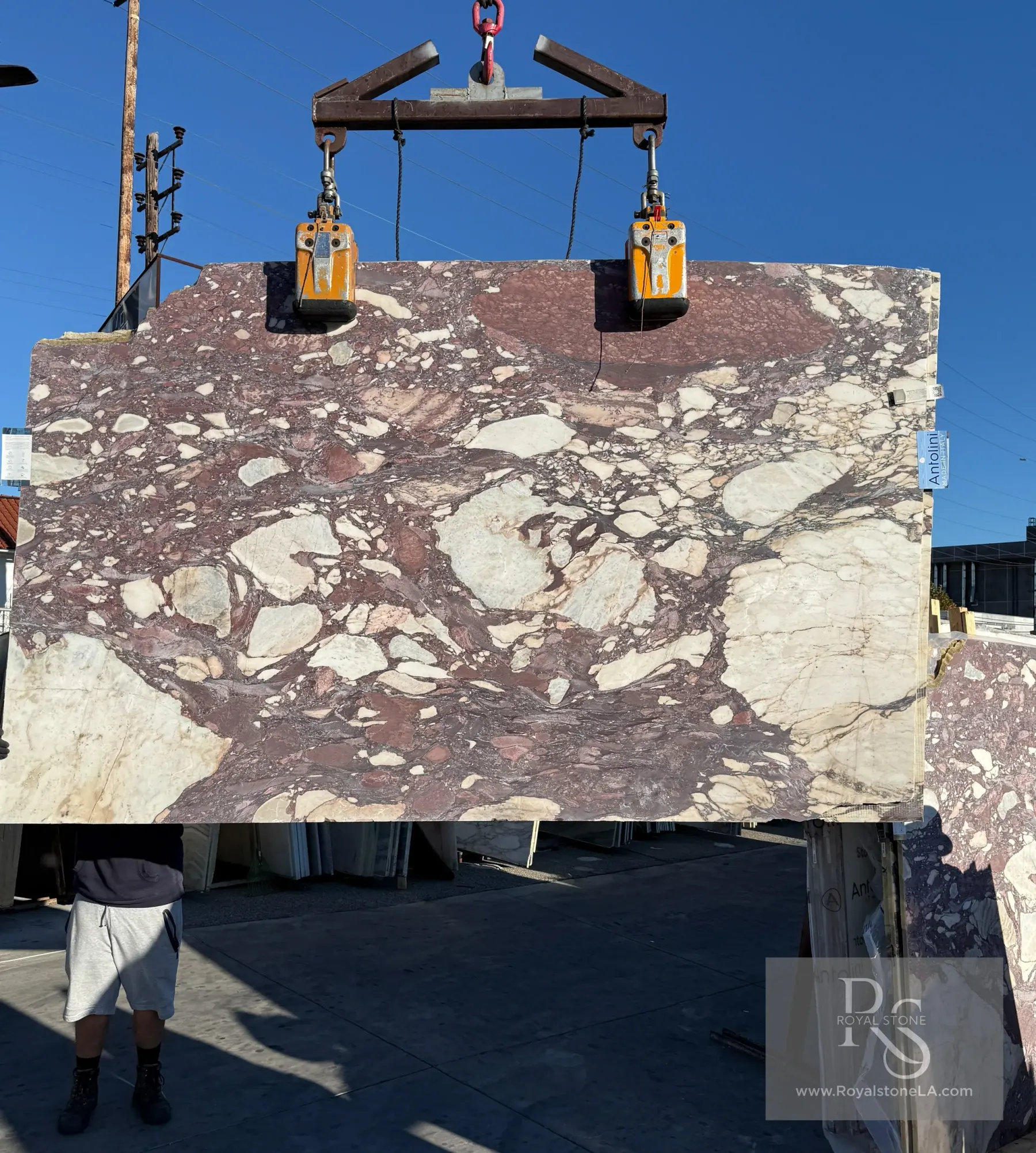
Slab Arrival
Antolini Calacatta Viola Brecciato WOW Honed
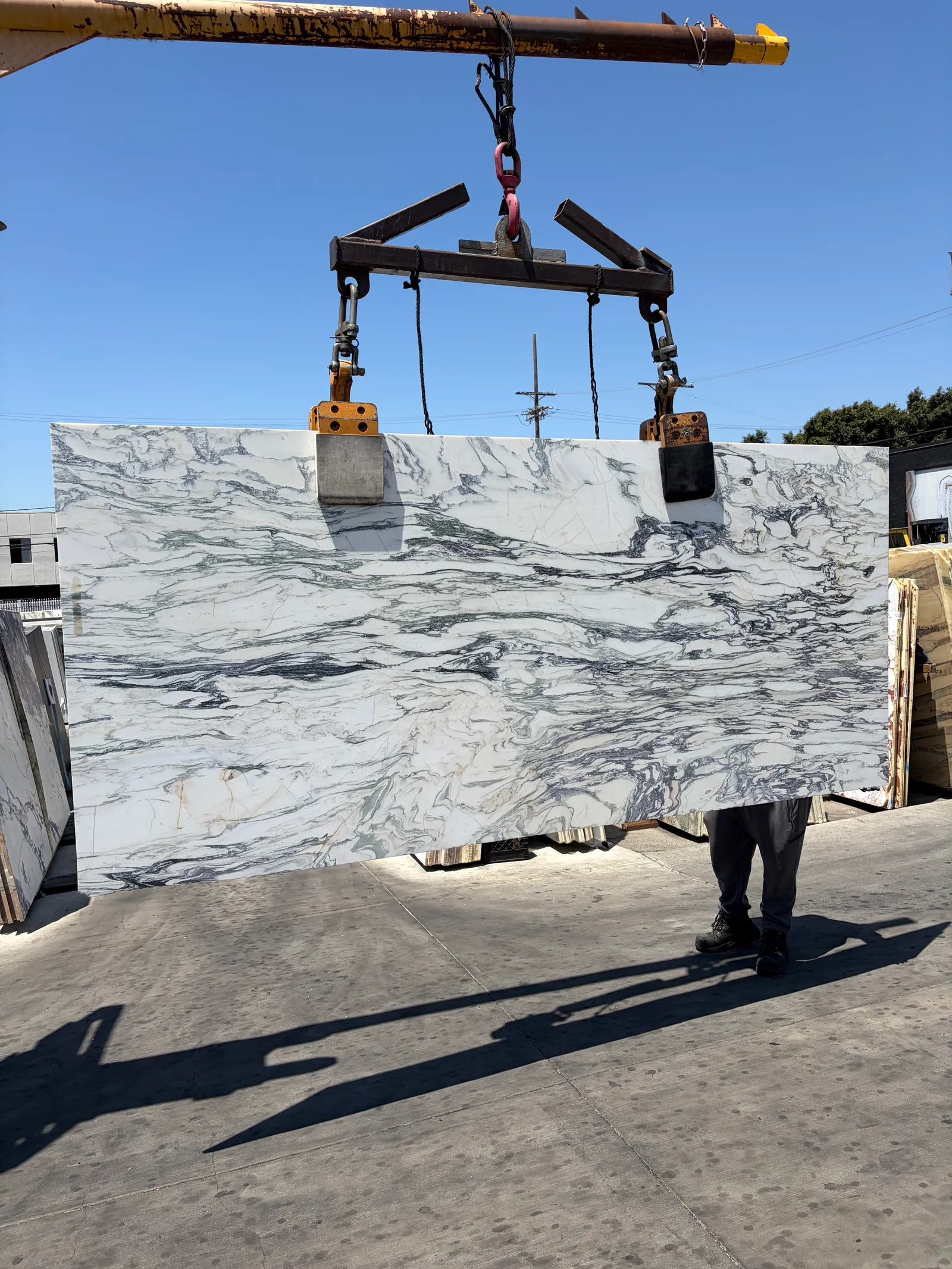
Slab Arrival
Antolini Calacatta Viola Classic DS431 Honed Marble
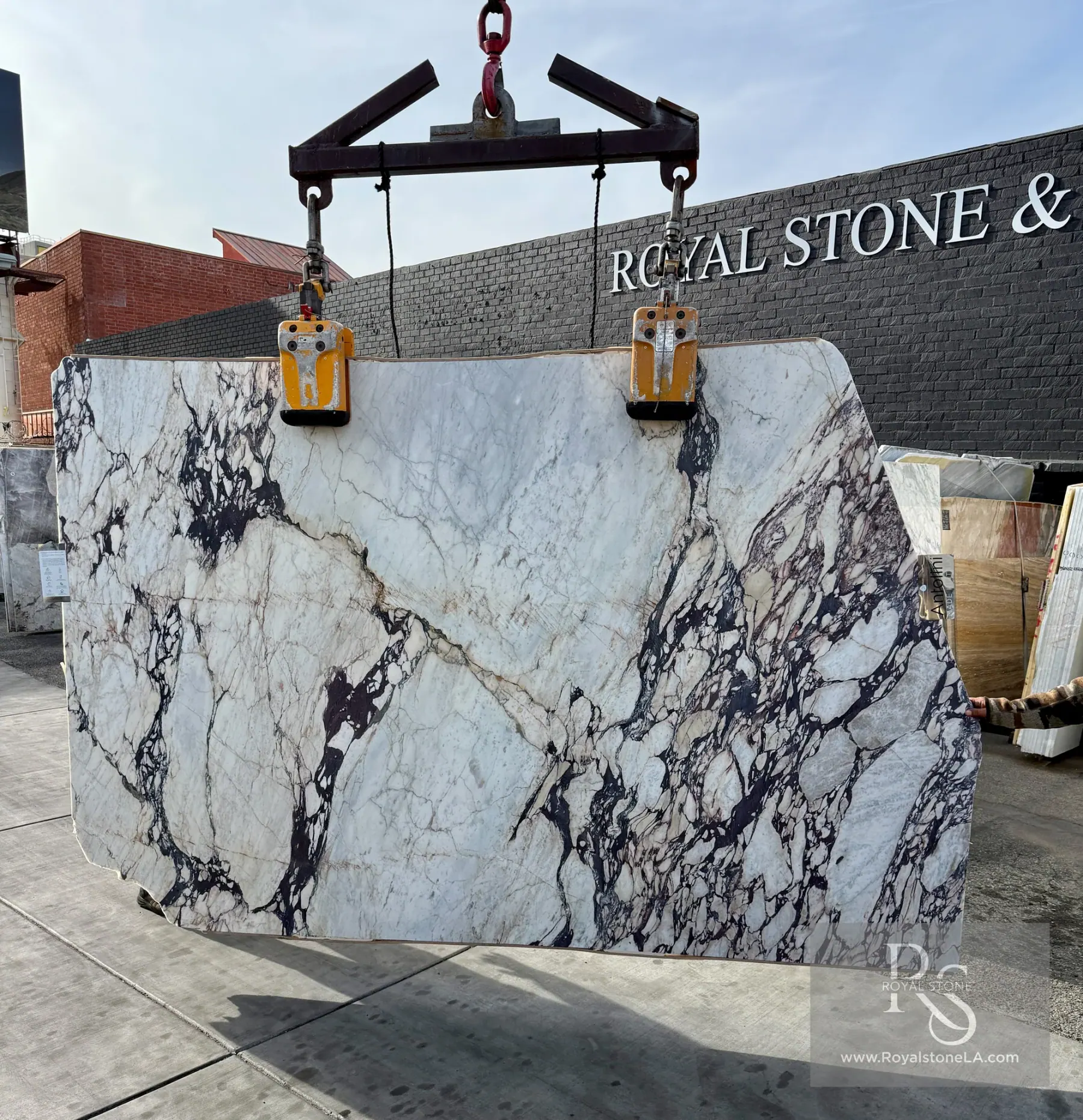
Slab Arrival
Antolini Calacatta Viola Marble YG580 Honed 74" × 112"
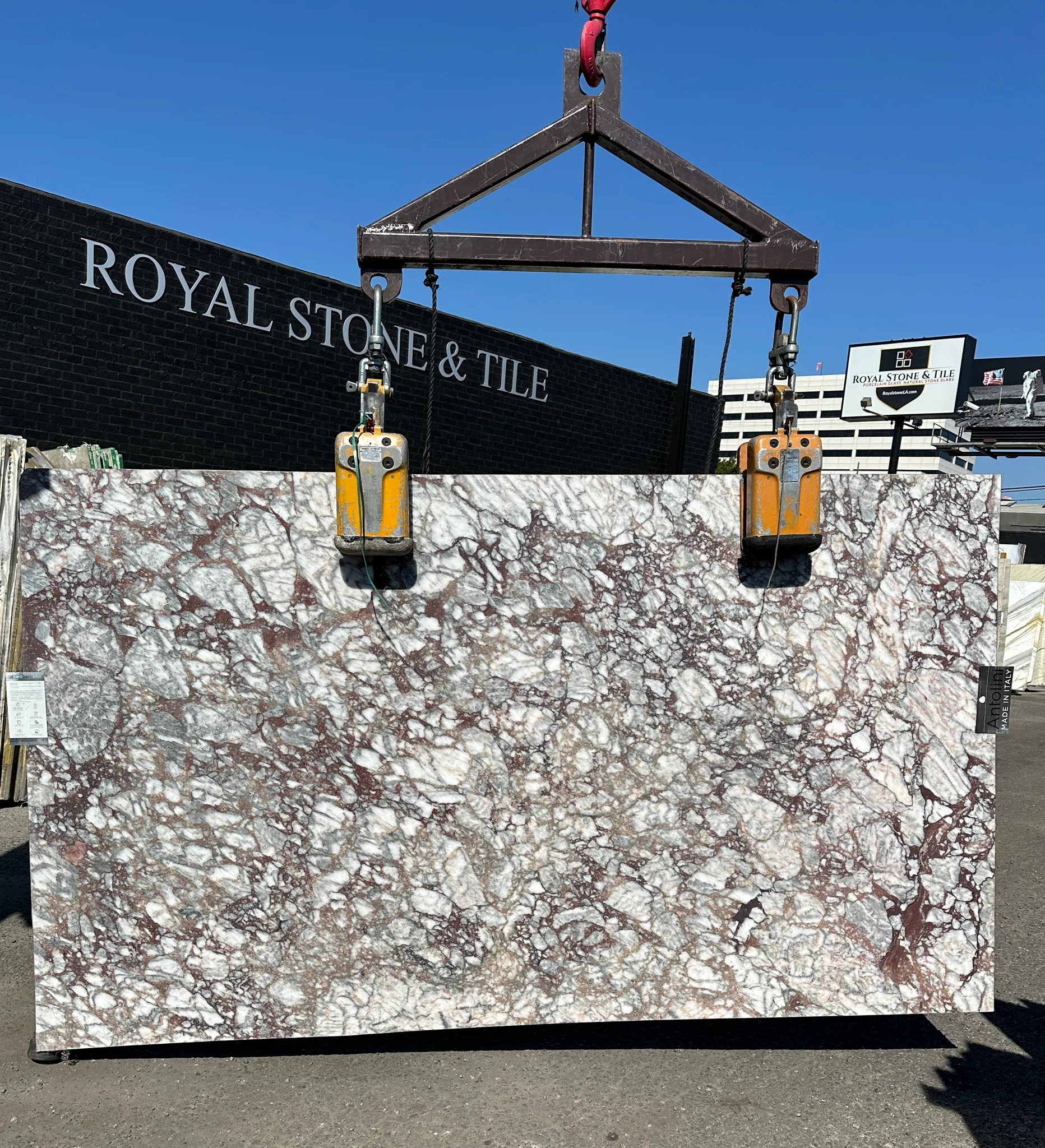
Slab Arrival
Antolini Viola GranViola Marble Semi-Polished
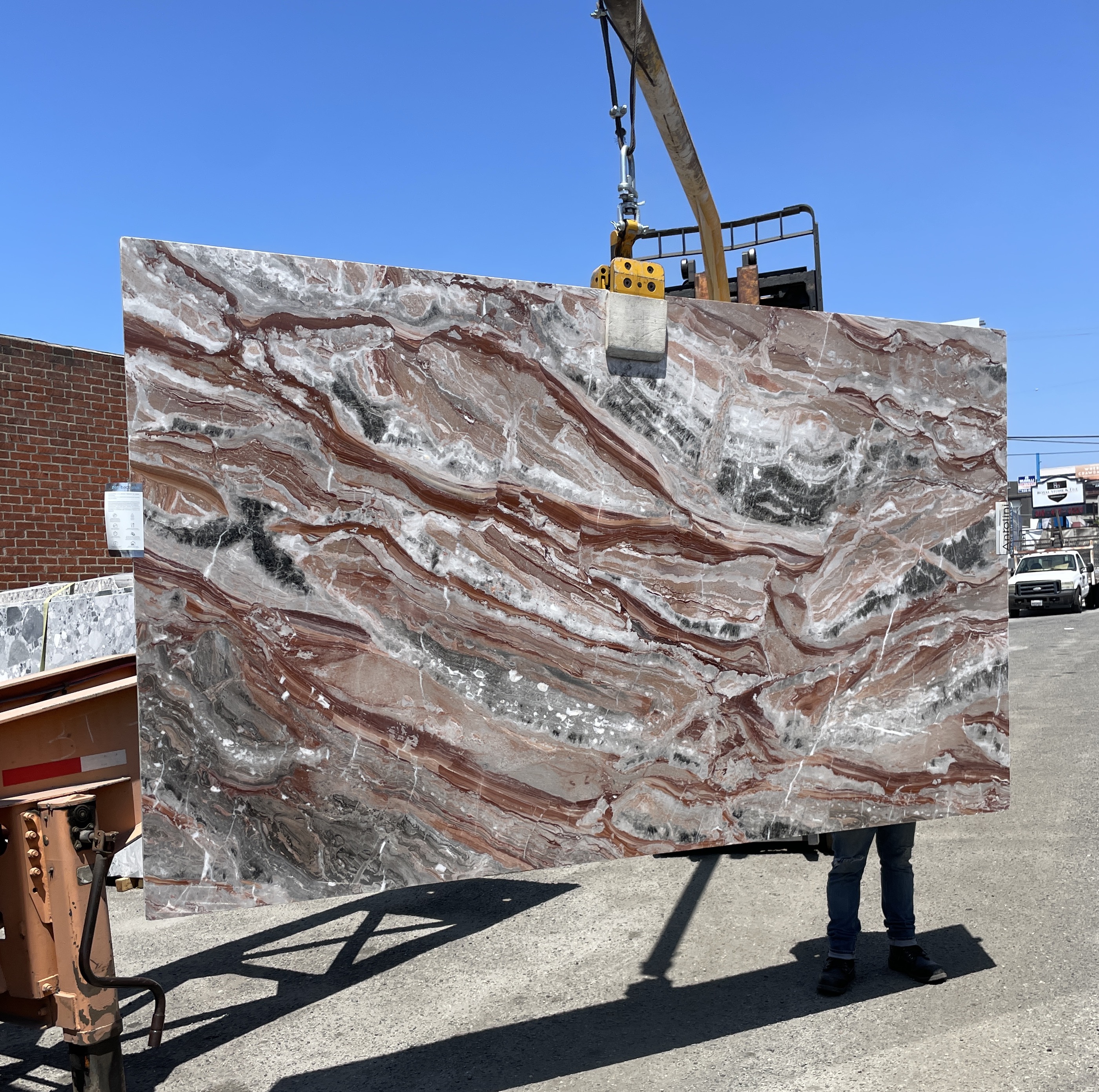
Slab Arrival
Antolini Viola Orobico Marble Slab Polished 72" × 126"
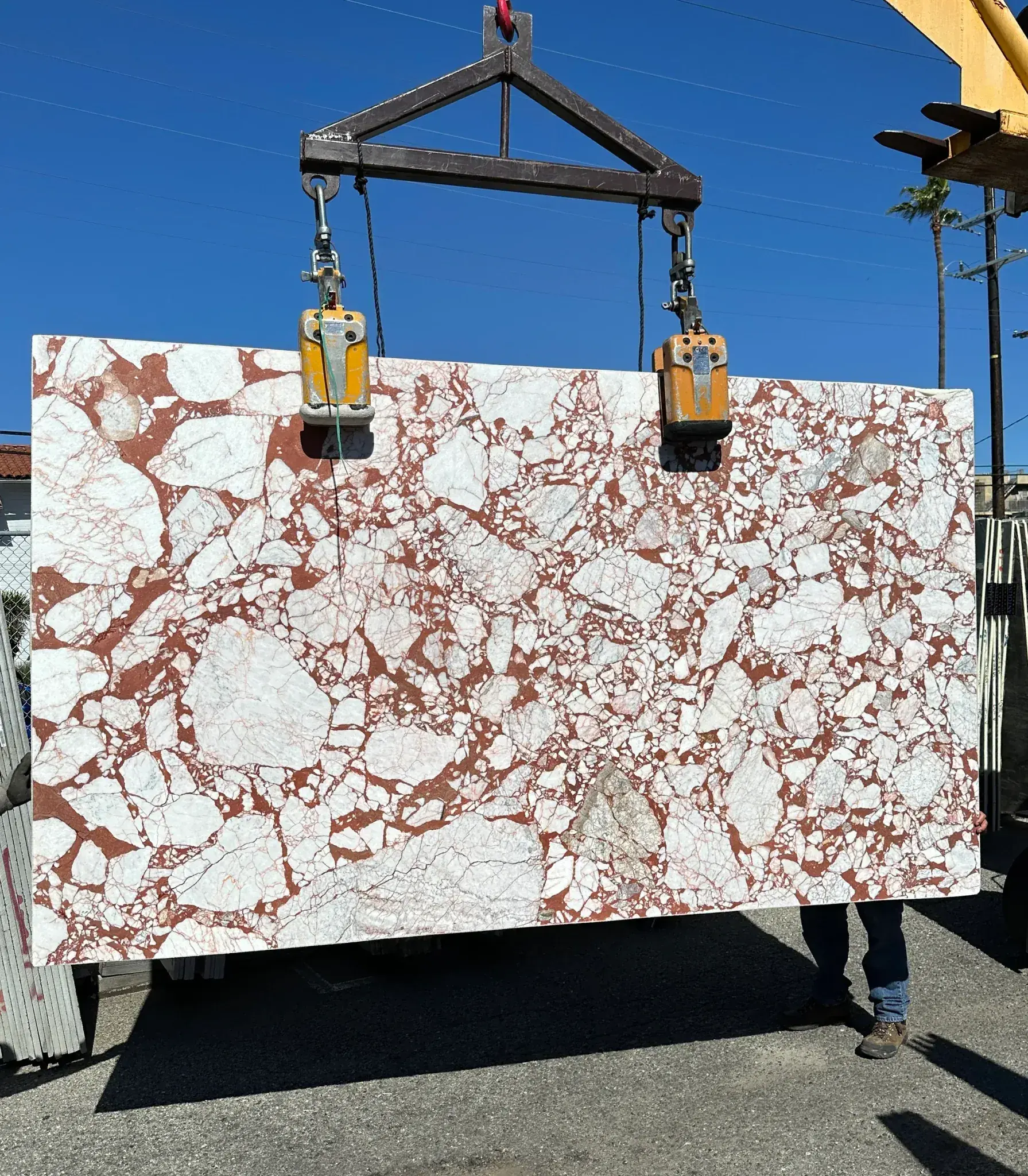
Slab Arrival
Calacatta Viola Rosso Extra, Leathered — 68" × 116"
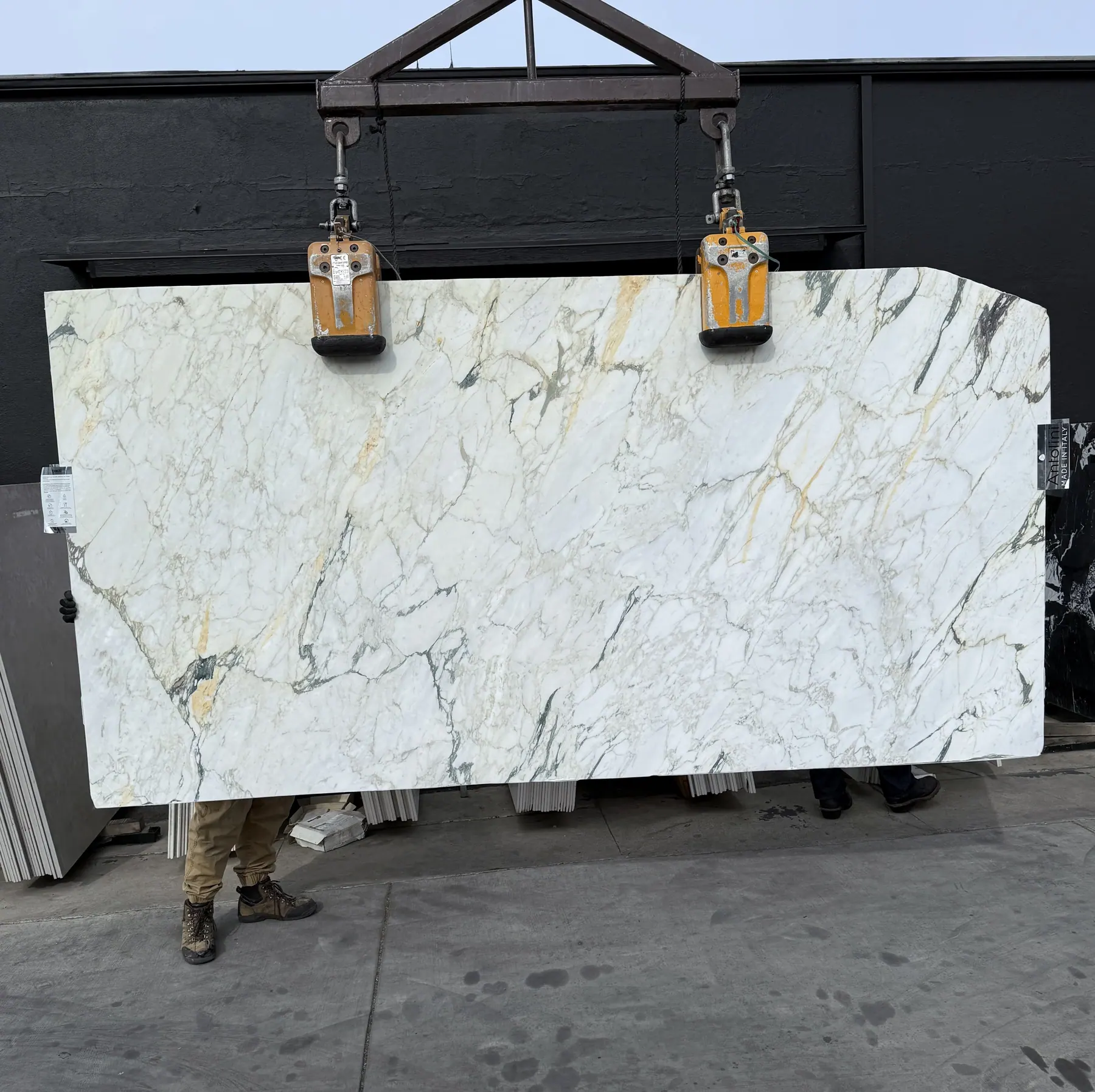
Slab Arrival
Calacatta Viola Verde Monet WOW
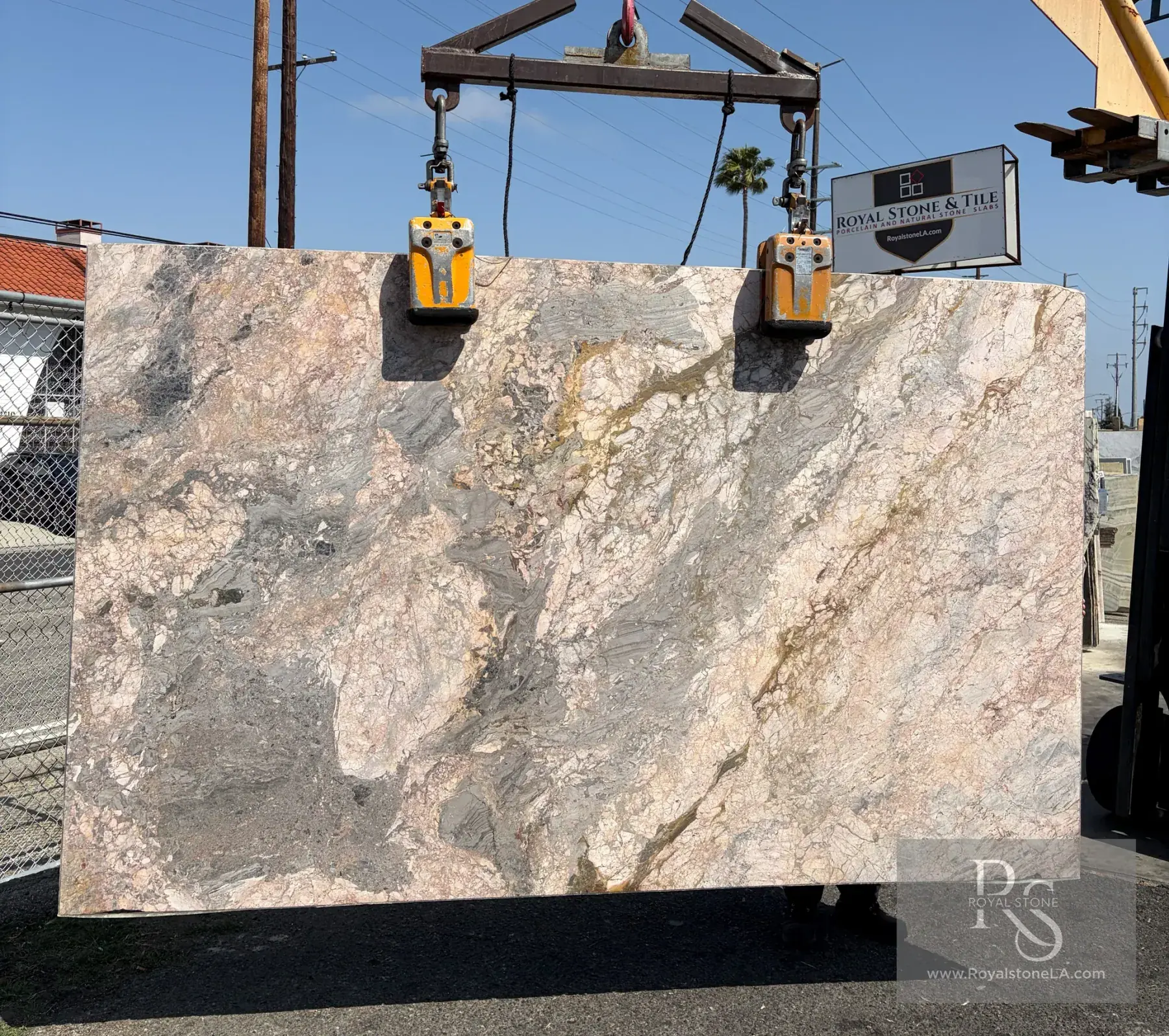
Slab Arrival
Ceppo Viola Cosmo Marble Honed 74" × 122"
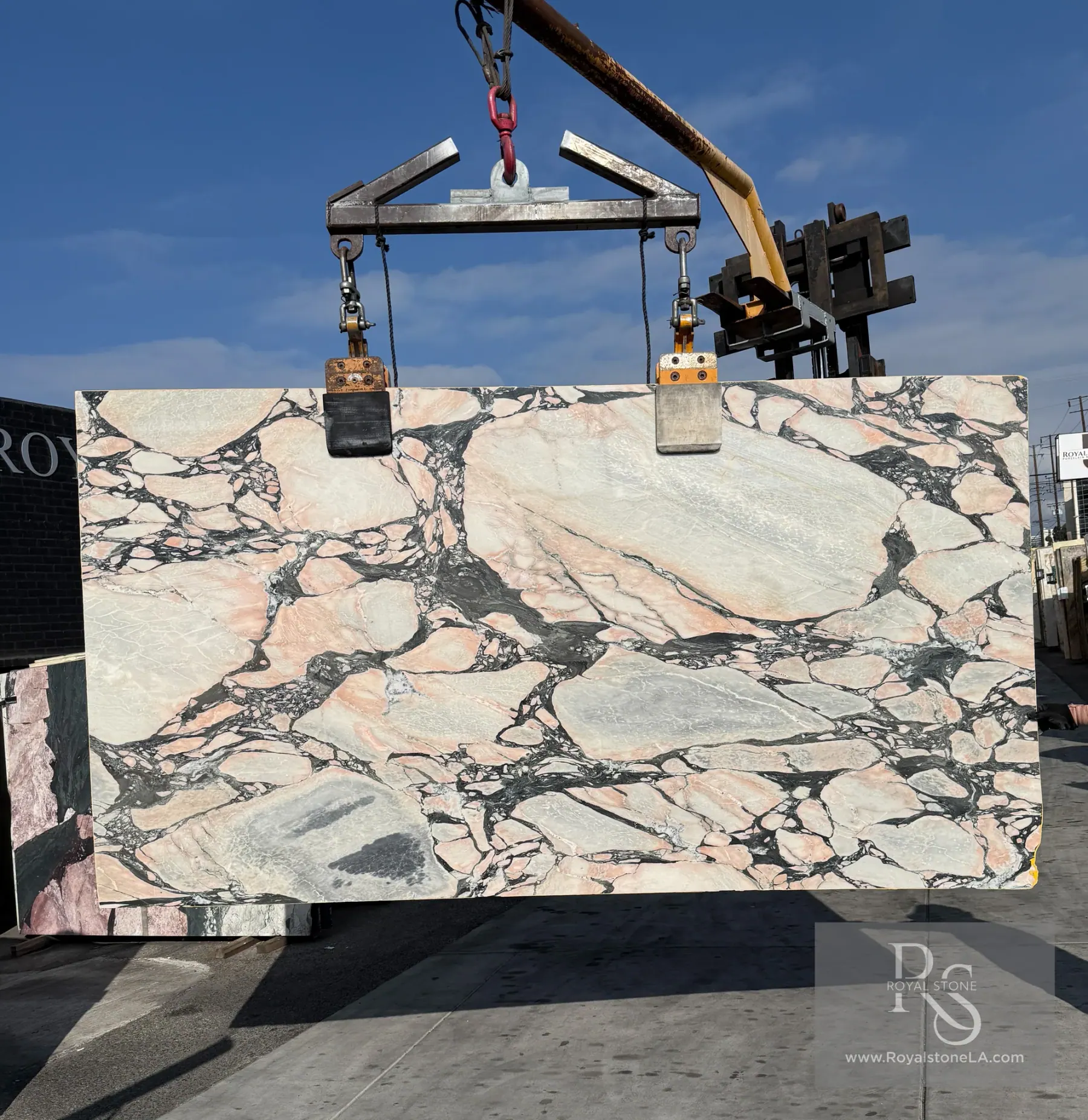
Slab Arrival
Viola Antico Paonazzo — Noir Rose Polished
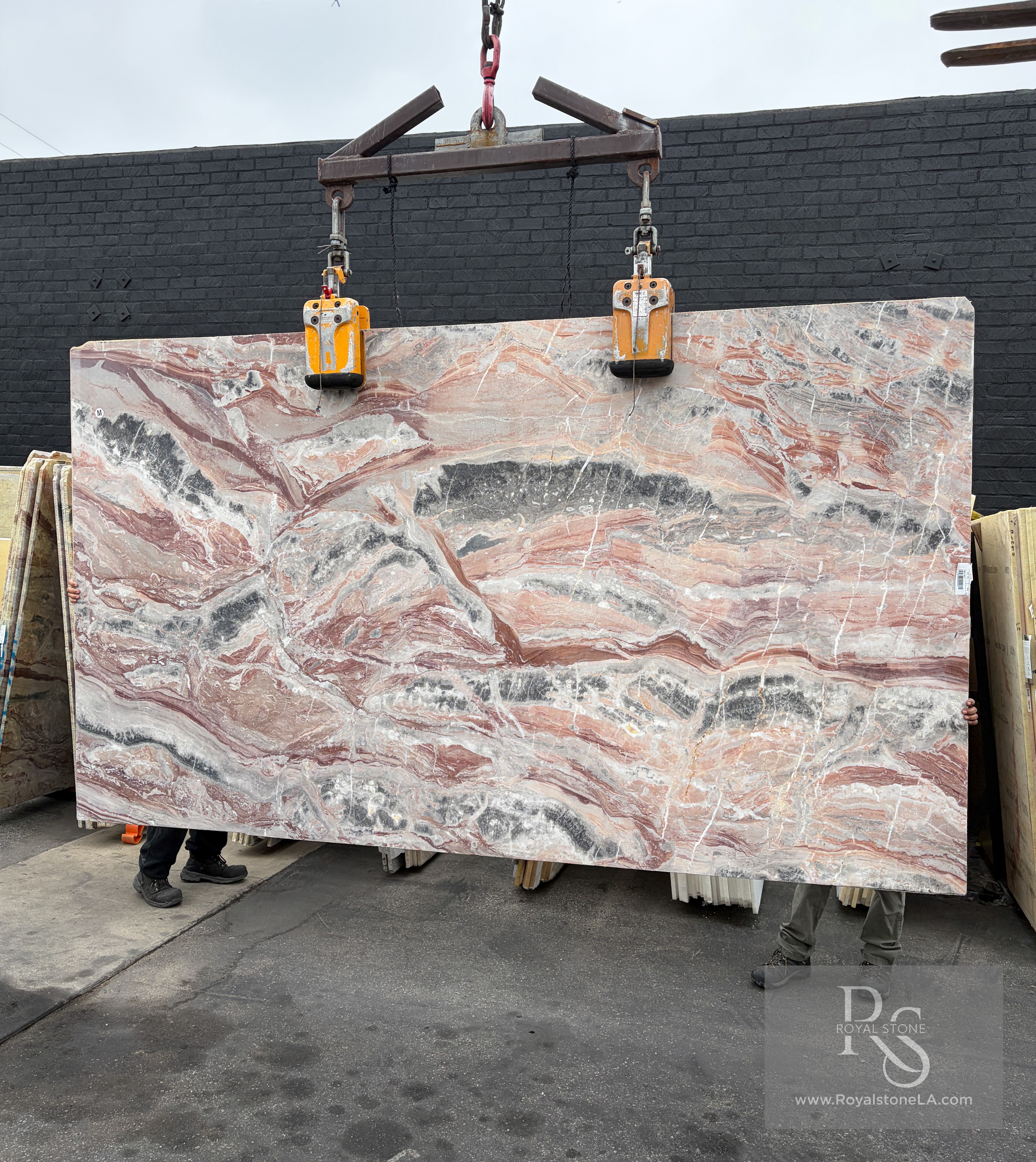
Slab Arrival
Viola Arabescato Orobico Rosso Marble Slab Honed 75" × 130"
Common Questions
Viola
questions, answered.
- What is Viola marble?
- Viola refers to a small family of rare Italian violet-veined marbles — Calacatta Viola, Viola Brecciato, and Ceppo Viola Cosmo — quarried in the Apuan Alps and the Verona basin. They pair a white or darker ground with veins of aubergine, plum, and violet.
- What is the difference between Viola and Calacatta Viola?
- Calacatta Viola is the specific, most-requested member of the Viola family — a clean white Calacatta ground with bold violet veining. The broader Viola family also includes Viola Brecciato, which breaks the field into angular fragments, and Ceppo Viola Cosmo, which carries pebbled inclusions in a darker matrix.
- Why is Viola marble so expensive?
- The manganese and iron that color Viola appear unpredictably in the block, so saturated, well-veined slabs are scarce. Supply is small and lots are irregular, which makes Viola one of the rarer, more expensive marbles available.
- Where is Viola marble best used?
- Because it is rare and dramatic, Viola is usually specified for a single sculptural moment — a powder bath, fireplace, bar back, or vanity — rather than large surfaces. As a true marble it etches with acid and is best kept off hardworking prep kitchens.
Visit the Yard
Walk a Viola slab
in natural light.
Slabs are one-of-one. We’d rather pull the piece for you to see than describe it from a photograph. Designers and private clients are welcome by appointment.