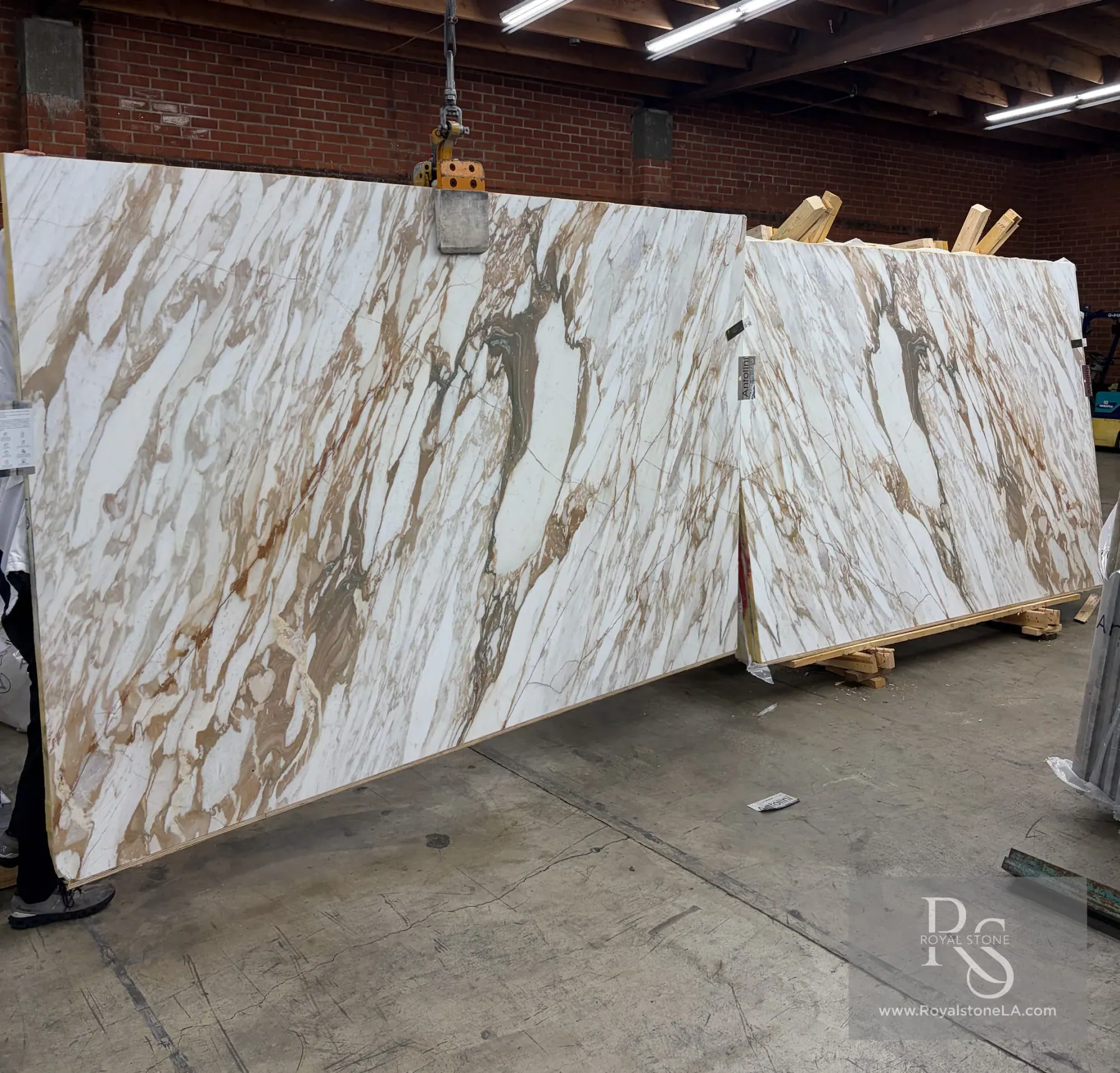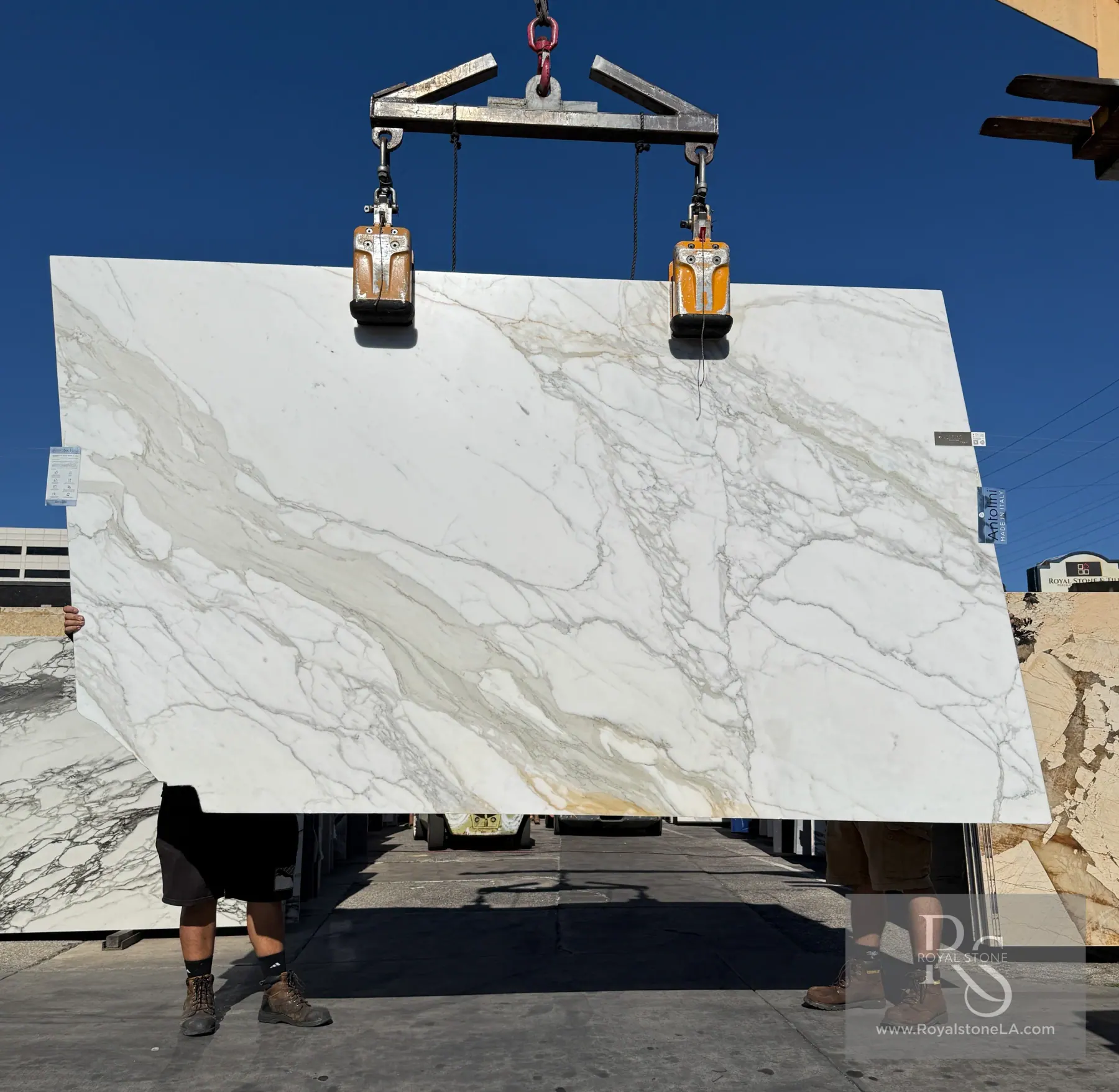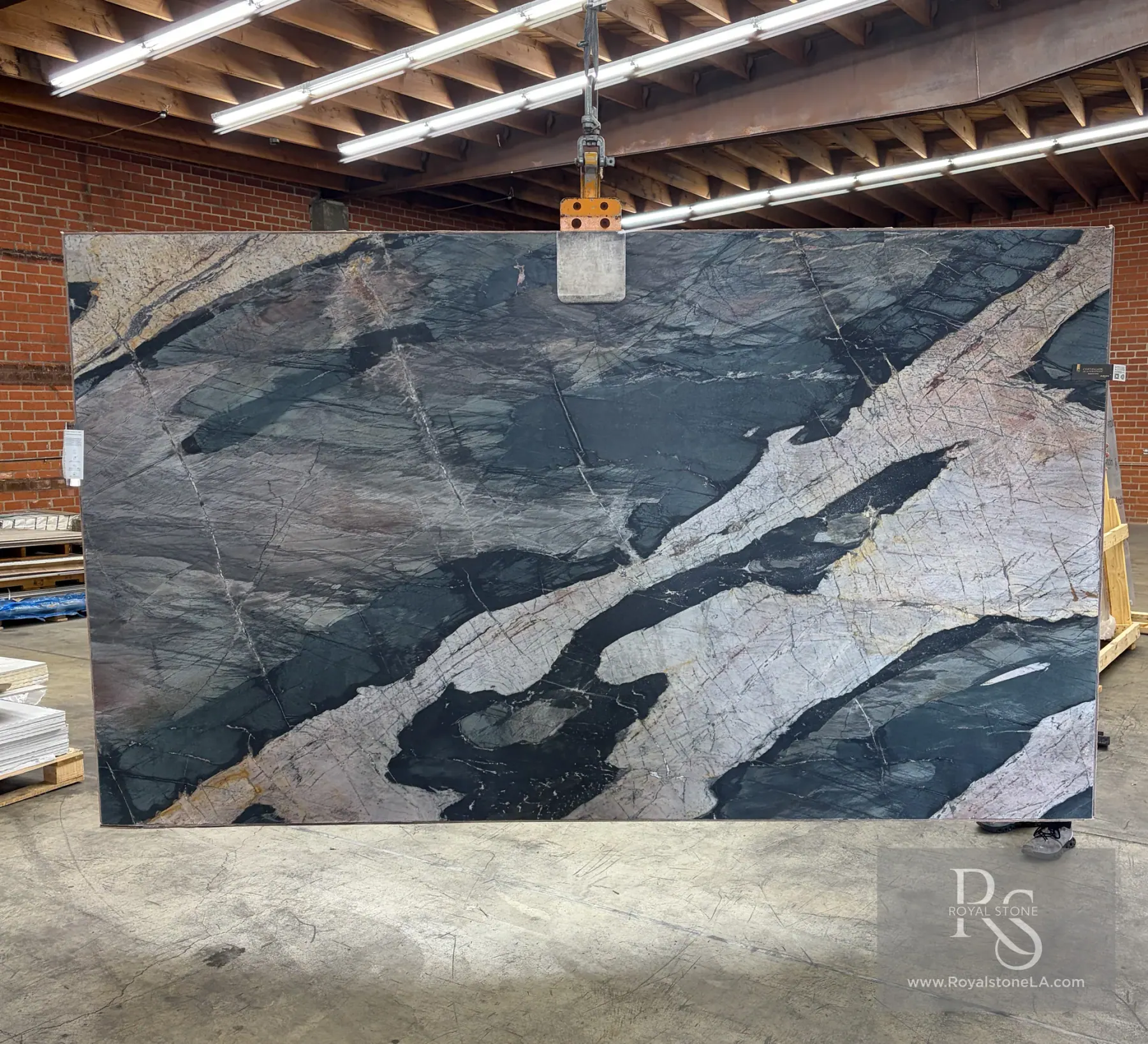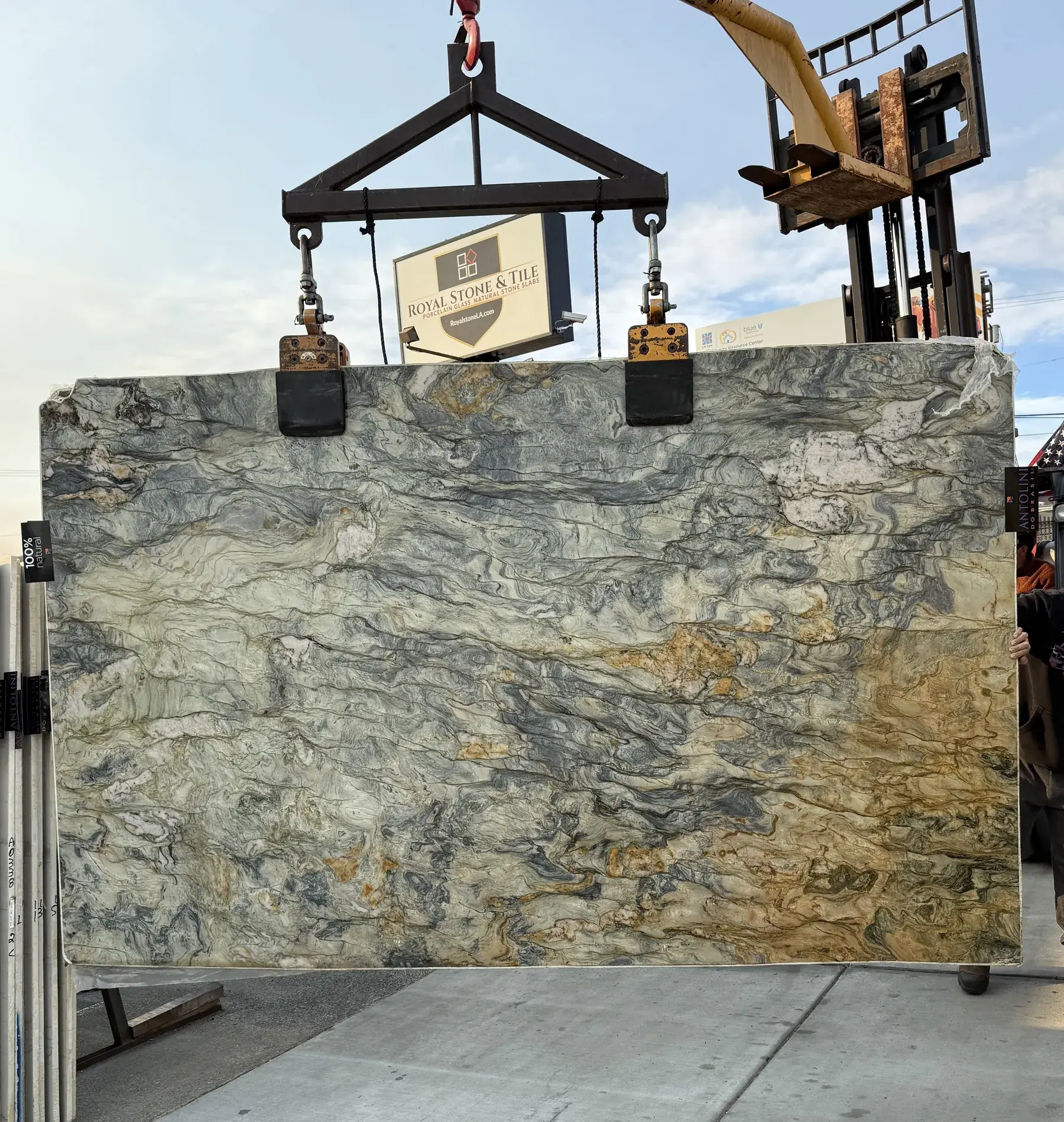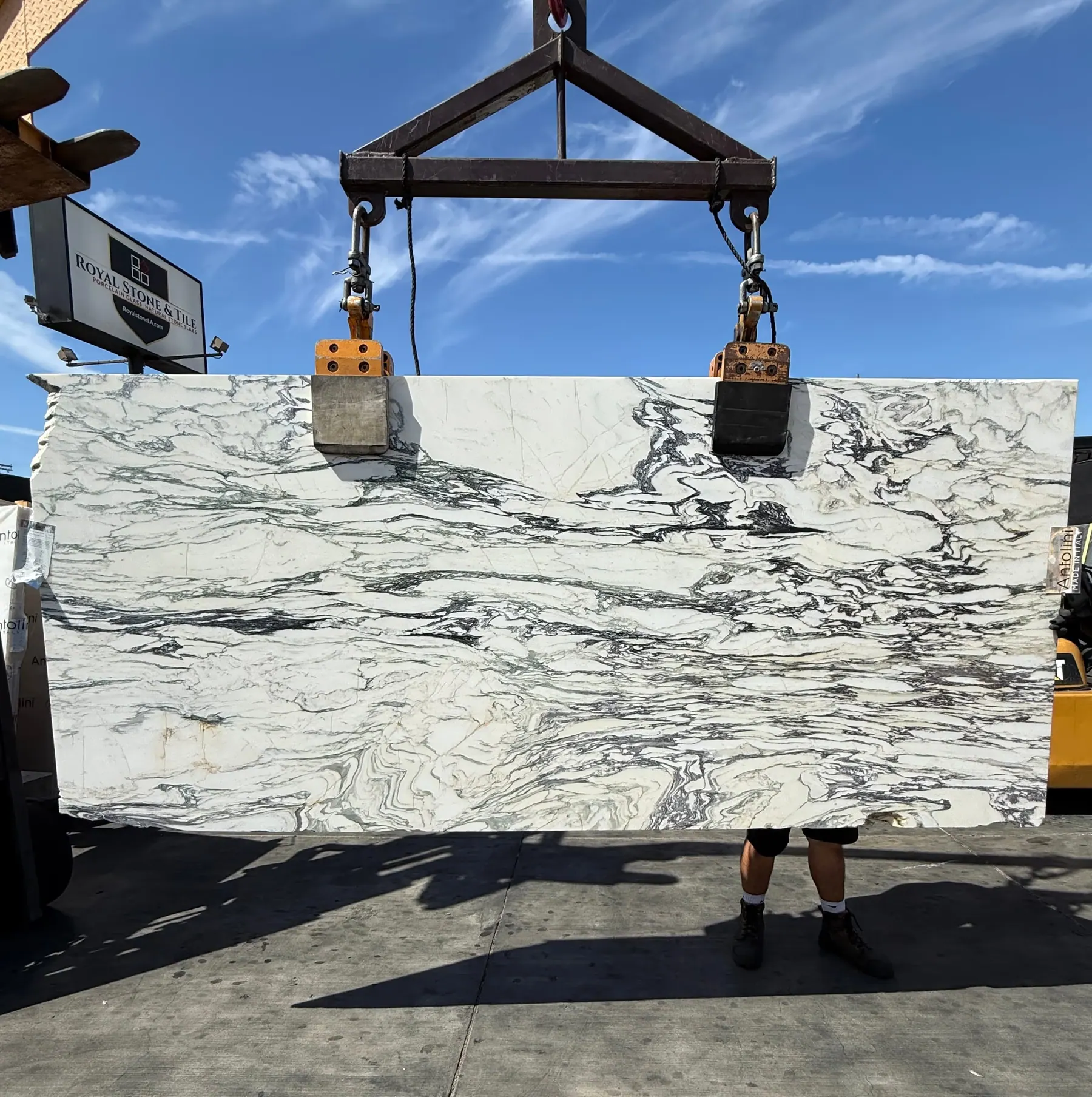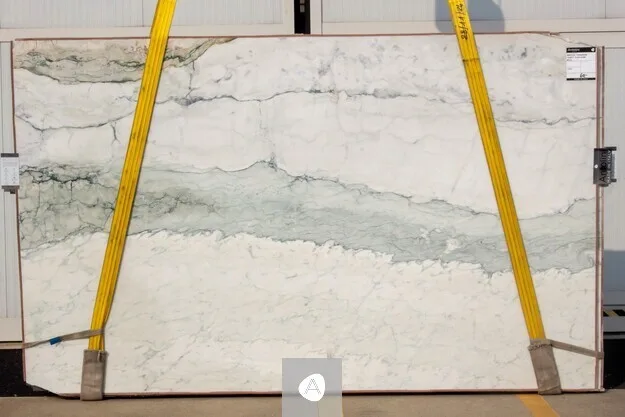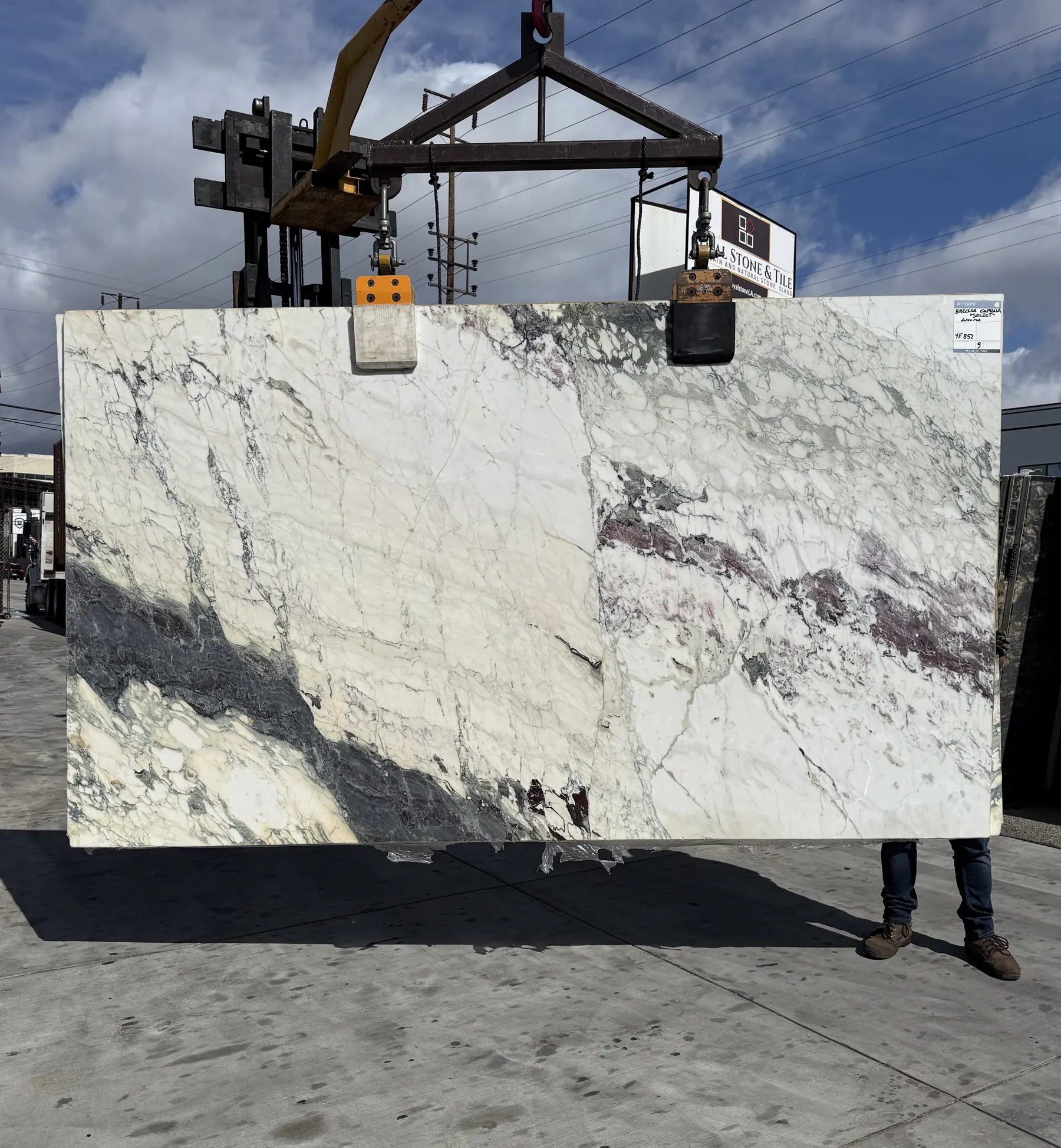
Breccia marbles are fragment stone — older marble broken up by geological pressure, then cemented back together inside a matrix of finer mineral. Quarried as a single block, then cut to slab. The pattern isn't designed; it's the fossil record of the rock failing and re-forming under pressure. Brèche de Vendôme, Breccia Capraia, Breccia Pernice, Ceppo Breccia — same logic, different colors.
When walking a breccia slab in person, three things to check: the size and density of the fragments (smaller and denser tends to read calmer; larger and sparser reads more dramatic), the contrast between fragment and matrix (high contrast wants honed; low contrast survives polish), and the direction of any banding (most breccias have a subtle layering that should orient with the longest dimension of the installation).
We keep a working set of breccia cuts in the yard — green-and-gold, burgundy-and-white, taupe-on-cream. Stop by to walk them side by side. Brecciated stones are particularly difficult to specify from photographs; daylight in the showroom is the only honest read.
Tagged